News
Lessons from the Grid: Heathrow's Localised Power Risk
When most people think about a power outage, a nationwide blackout is imagined. In practice, that’s not how disruption happens anymore. Across the UK, the greater risk comes from localised infrastructure failures, sudden faults within substations, transformers or distribution networks that can take critical operations offline instantly without wider warning.
The recent Heathrow incident is a clear example of how significant that impact can be.

One Substation, Total Disruption
The fire at the North Hyde electricity substation in Hayes caused major disruption at Heathrow Airport, leading to widespread flight cancellations and operational shutdowns. According to BBC News reporting on the incident, the failure of a single substation had a cascading impact across one of the world’s busiest transport hubs.
Despite Heathrow’s multiple incoming feeds and layered resilience design, the severity of the fault forced a full operational pause:
- Over 200,000 passengers impacted
- More than 1,000 flights cancelled
- Significant delays while engineers reconfigured high-voltage distribution networks
The key point is not the scale of the airport but the nature of the failure. A single local infrastructure event was sufficient to disrupt a nationally critical operation.
How Resilient Is Your Power Infrastructure?
While your business may operate on a different scale than an international transport hub, the risk profile is identical.
If your power infrastructure relies solely on the local grid, you are vulnerable to the same "cascading impact" caused by ageing local substations or minor faults in your immediate area.
- Ask yourself: Could a 30-minute power flicker at your local substation halt your production line?
- If your site went dark suddenly, would your current backup systems trigger instantly without data loss?
- Consider how much a "complete operational pause" would cost your business in terms of revenue, reputation and recovery time.
The Local Network Is the Critical Point of Failure
The weak point is not generation capacity but the local chain of substations, transformers and distribution networks that deliver electricity to individual sites. These systems are largely invisible to end users and typically only come into focus once a fault occurs. The National Energy System Operator (NESO) has highlighted increasing pressure on local distribution infrastructure, where ageing assets and peak demand are creating growing vulnerability.
At Adept Power Solutions, we recognise this is where most risk sits, in sudden localised interruptions that occur without warning and immediately disrupt critical systems.
Why Milliseconds Matter More Than Minutes
When a local transformer or upstream device fails, power does not fade, it is lost instantly. For critical environments, a fraction of a second of interruption can result in serious operational disruption, including data corruption within servers and storage systems, production line stoppages, control system failure and unexpected system resets.
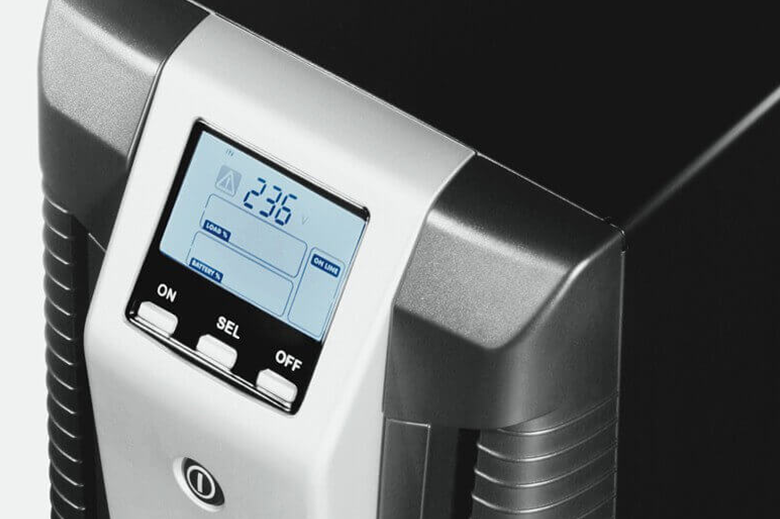
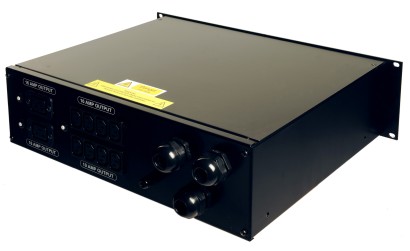
This is why Uninterruptible Power Supply (UPS) systems are fundamental to modern power protection strategies. A properly engineered three-phase UPS system provides instantaneous coverage, bridging the gap between grid failure and standby generation without interruption to the load.
However, UPS performance is not defined by installation alone. It depends on system load design, bypass capability and resilience under fault conditions. Without these elements in place, protection can fail precisely when it is needed most.
Outages Extend Beyond UPS Runtime
The Heathrow disruption also highlights a second operational reality: local infrastructure faults are rarely resolved quickly. High-voltage failures, fire damage and network reconfiguration work often require extended engineering intervention and can take hours or longer to fully stabilise.
A UPS system is not designed to support a facility indefinitely; it is a bridge technology intended to carry the load only through the transition period. To maintain continuity beyond this point, businesses require standby generator systems integrated with automatic transfer switching (ATS).
When correctly designed, the UPS carries the immediate interruption, the generator starts automatically within seconds, the ATS transfers the load safely and operations continue without interruption. Without this layered approach, backup power is only temporary and the business will eventually lose power and stop operating.
The Hidden Risk Within UPS Systems
One of the most overlooked failure points in UPS infrastructure is not sudden equipment failure but gradual battery degradation. From the outside, systems often appear fully operational, with normal voltage readings, stable indicators and no active alarms. Internally, however, batteries may already be significantly degraded due to heat exposure, ageing cells, repeated charge cycles and impedance imbalance.
This creates a misleading sense of operational security. When an outage occurs, available runtime can be reduced dramatically from expected minutes to only seconds.
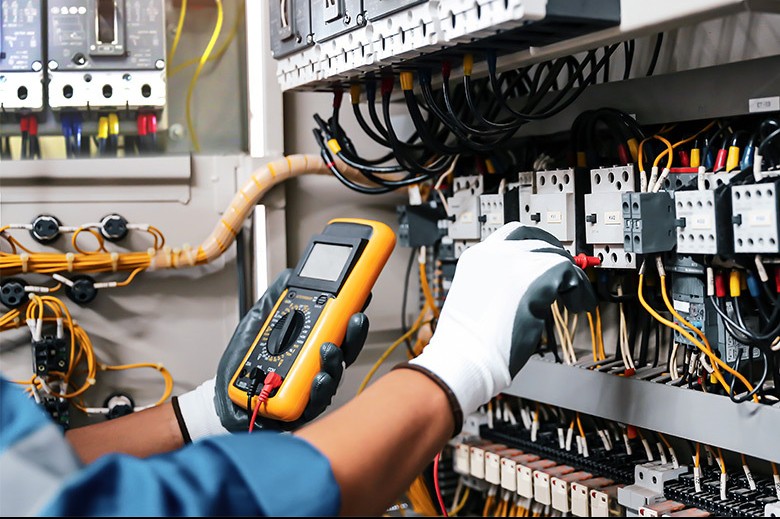
To address this, proactive monitoring and testing are essential. Through Adept’s Remote Monitoring (ARM), system performance is continuously tracked, enabling early detection of battery deterioration and system faults before they result in operational downtime.
Response Capacity Becomes the Secondary Constraint
During a local substation failure, disruption is rarely isolated to a single site. Entire industrial estates, business districts and commercial zones are often affected simultaneously, placing immediate pressure on available engineering resources.
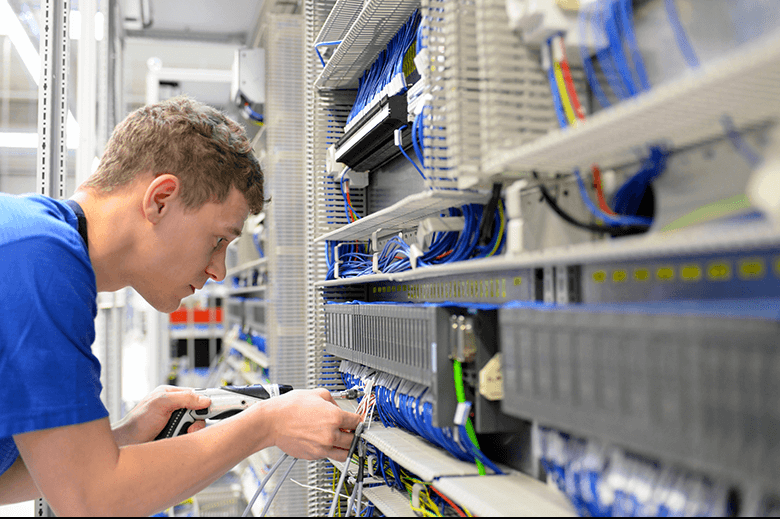
This creates a secondary constraint in the form of response capacity. Engineers are deployed rapidly, service queues increase instantly, emergency response times extend and critical systems are left waiting for support during peak demand conditions.
For this reason, structured service agreements become a critical component of resilience planning. A Platinum SLA maintenance contract ensures priority response even during widespread regional disruption events.
Comparative Resilience Overview
| Scenario | UPS Only | UPS + Generator | Full Layered Protection (UPS + Generator + ARM + SLA) |
| Instant grid failure | Temporary protection only | Seamless transition to backup power | Continuous protection with monitoring |
| Extended outage | Limited battery runtime | Continuous operation (fuel dependent) | Managed continuity with predictive oversight |
| UPS failure event | Immediate downtime | Partial vulnerability remains | Bypass protection and engineered redundancy |
| Regional disruption | Standard response queues | Delayed engineering access | Priority SLA-backed response |
The Heathrow blackout was not an example of backup power failure but rather a demonstration of how exposed modern infrastructure remains at a local level. The key takeaway is that most operational disruption does not originate from national grid instability but from local infrastructure events that cannot be predicted or controlled in advance.
True resilience is not achieved through a single system but through layered protection combining UPS systems, standby generation, proactive monitoring, and guaranteed response support. When these elements operate together, businesses are not purely reacting to disruption; they are insulated from it.
Explore UPS systems, standby generators, monitoring solutions and maintenance services designed to keep your business running when the grid doesn’t.
Related Articles